
Schools
Summer School 21.-25. September 2026
"Machine Learning for Digital Scholarly Editions"
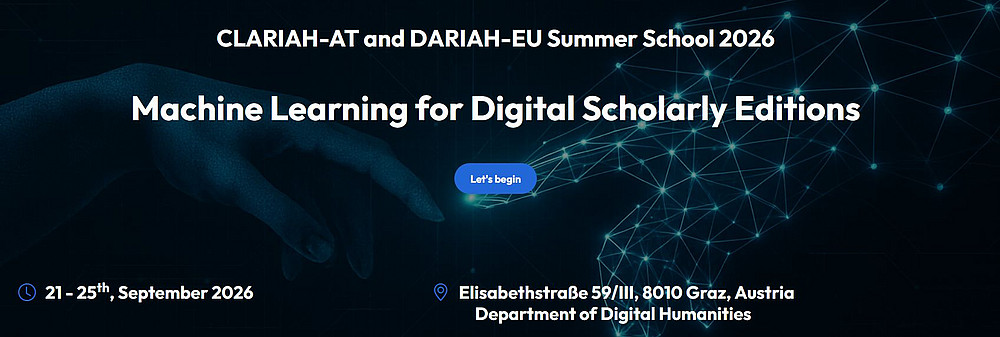
Summer School 08.-12. September 2025
"Machine Learning for Digital Scholarly Editions"
Winter School 23.-26. November 2022
"Digitizing the Materiality of the Premodern Book"
A cooperation between Centre for Information Modelling, University of Graz Library's Special Collections and the Vestigia Manuscript Research Centre.
The foundational skills at the intersection of digitization, bibliography, and the Digital Humanities are crucial for many scholars, yet instruction frequently only covers one maybe two of these intersecting aspects. For example, use of the Text Encoding Initiative XML standard is increasingly the norm in digital scholarly editing, but many individuals working with textual materials do not have access to relevant scholarly training in DH. Conversely, many DH departments, lack rare book specialists. The goal of this workshop is to create one succinct class where students will learn the necessary skills for understanding how the materiality of pre-modern books can be digitized and provide a foundation for putting those skills into practice. After attending this workshop, students will understand the fundamentals of digitization and how books and manuscripts are described in the TEI, including the msdescription and transcription modules.
STAFF (in alphabetical order)
- Mag. Pia FIEDLER is a librarian in the Uni Graz Digitization Lab & PhD student at Vestigia Manuscript Research Centre.
- Dr. Sarah LANG is an expert in digital edition & conducts public-facing DH education on the LATEX Ninja blog.
- Oberrat Karl LENGER, MA heads the University of Graz’s digitization lab.
- Dr. Megan PIORKO is a historian of the book & was named the Pantzer New Scholar of the Bibliographical Society of America in 2019.
- Elisabeth Raunig, BA MA
- Univ.-Prof. Dr. Erich RENHART is Director of Special Collections at the University of Graz Library & a Syriac manuscript scholar.
- Dr. Sean M. WINSLOW is a medieval manuscripts & heritage imaging expert with experience developing TEI catalogs of manuscript materials.
Parts of this workshop will be filmed for the purpose of creating educational videos (which will be shared as Open Educational Resources in the future). Participants will be required to fill out a data consent form to participate.
This project is funded by CLARIAH-AT with the support of BMBWF.
Spring School 06.-09. April 2021
"Linked Data & the Semantic Web for Humanities Research"
The spring school is co-organized by the Austrian Centre for Digital Humanities and Cultural Heritage at the Austrian Academy of Sciences and the Centre for Information Modelling – Austrian Centre for Digital Humanities at the University of Graz and is funded by CLARIAH-AT and supported by the H2020 project ELEXIS.
The school will give an introduction to the concepts related to the Semantic Web and Linked Data and will give an overview of semantic web technologies and tools with a special focus on application scenarios in the Humanities
- Identifying standards and technologies
- RDF and triples
- Semantic querying: SPARQL and triple stores
- Linked data curation
- Knowledge Representation and Ontologies
- Linked Data in Linguistics
- Modelling cultural heritage data
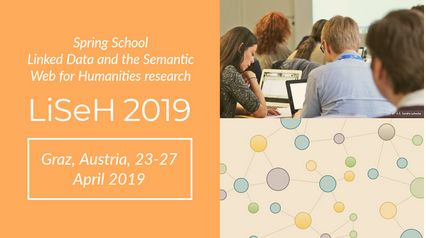
Spring School 23.-27. April 2019
"Linked Data and the Semantic Web for Humanities research"
The spring school is co-organized by the Austrian Centre for Digital Humanities at the Austrian Academy of Sciences and the Centre for Information Modelling – Austrian Centre for Digital Humanities at the University of Graz.
It is part of the ‘Training Digital Scholars: Knowledge Exchange between V4 and Austria’ Series financed by the Visegrad Fund, in collaboration with the ‘ELEXIS’ Horizon 2020 project and the Erasmus+ project ‘DigiCulture’.
The school will give an introduction to the concepts related to the Semantic Web and Linked Data and will give an overview of semantic web technologies and tools with a special focus on application scenarios in the Humanities
- Identifying standards and technologies
- RDF and triples
- Semantic querying: SPARQL and triple stores
- Linked data curation
- Knowledge Representation and Ontologies
- Linked Data in Linguistics
- Modelling cultural heritage data
Summer School 18.-22. September 2017
"Computergestützte Analyse und Verarbeitung von Sprache und Text. Text (und Data) Mining Methoden in der geisteswissenschaftlichen Forschung"
Tokenisierung, Lemmatisierung, POS-Tagging: Diese Schlagworte spielen in den Geisteswissenschaften eine immer größere Rolle. Mehr und mehr Primär- und Sekundärquellen sind digital verfügbar. Daher werden maschinelle Analyse- und Verarbeitungsmethoden zunehmend wichtiger. Die Summer School vermittelte Basiskenntnisse und eine wissenschaftliche Einführung in die computergestützte Analyse und Verarbeitung von Sprache und Text. Internationale ExpertInnen gewährten direkten Einblick in erfolgreiche Projekte und stellten konkrete Lösungswege für fachspezifische Fragestellungen vor. Die Teilnehmer:innen konnten sind diese auch gleich anhand ihrer eigenen Materialien erproben.
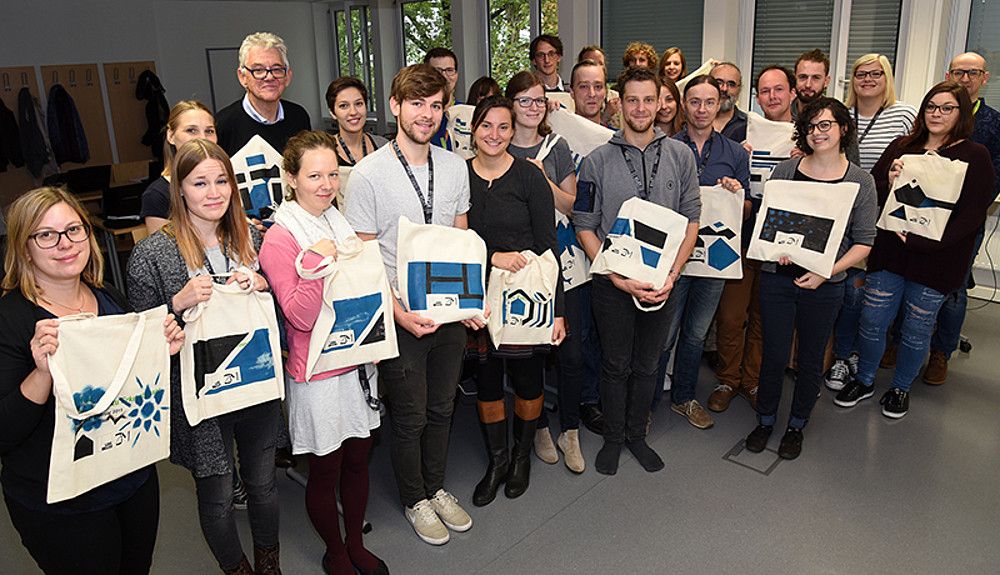
Summer School 05.-09. September 2016
"Digitale Edition. Erschließung geisteswissenschaftlicher Quellen mit digitalen Methoden."
Spring School 13.-17. April 2015
"Advanced XML/TEI technologies for Digital Scholarly Editions"
Vom 13.4.-17.4.2015 veranstaltete das Zentrum für Informationsmodellierung gemeinsam mit dem Digital Scholarly Editions Initial Training Network (DiXiT) und dem Institut für Dokumentologie und Editorik (IDE) eine Spring School zum Thema “Advanced XML/TEI technologies for Digital Scholarly Editions”.
An der School nahmen 22 internationale Wissenschafter:innen aus Argentinien, Belgien, Bulgarien, Deutschland, Irland, Italien, Frankreich, Österreich, Schweiz, Serbien, Spanien und dem Vereinigten Königreich teil. Einige von ihnen konnten wir unter anderem dank Unterstützung des Büros für Internationale Beziehungen der Universität Graz mit Reisestipendien unterstützen.
Neben speziellen Fragen der Textkodierung mit XML TEI P5 lag der Schwerpunkt auf der Weiterverarbeitung und Präsentation digitaler Editionen im WWW.
Unterrichtet wurden die Teilnehmer:innen von internationalen Expert:innen aus dem Bereich Digitaler Editionen: James Cummings und Magdalena Turska von der Universität Oxford, Alexander Czmiel von der Berlin-Brandenburgischen Akademie der Wissenschaften, Franz Fischer und Ulrike Henny vom Cologne Centre for e-Humanities sowie Torsten Schaßan von der Herzog August Bibliothek Wolfenbüttel. Von Seiten des ZIMs waren außerdem Frederike Neuber, Martina Semlak, Gunter Vasold und Georg Vogeler an der Lehre beteiligt.
Tara Andrews, Assistant Professor an der Universität Bern hielt eine Keynote mit dem Titel “On Form and Substance – Encoding, Modelling, and the Fine Line Between”.
Neben einer Stadtführung durch Graz und einem kleinen Empfang in den neuen Räumen unseres Centres, konnten die TeilnehmerInnen bei einem Ausflug auf die Weinstraße bei Sonnenschein und traumhafter Aussicht Energien für die restliche Woche schöpfen.
Spring School 13.-17. April 2015
"XML/TEI and Digital Scholarly Editions – Standards, tools and software"
Von 14. bis 19. September fand am Zentrum für Informationsmodellierung ein Camp zum Thema „XML/TEI and Digital Scholarly Editions – Standards, tools and software“ statt. Eine Woche lang tauchten die rund 35 TeilnehmerInnen aus Europa, Nordamerika und Südamerika in die Welt des digitalen Edierens ein und wurden dabei von Mitarbeitern des Zentrums für Informationsmodellierung sowie von Dozenten aus England, Deutschland, den Niederlanden, Polen und Rumänien betreut. Das Camp wurde im Rahmen des Marie-Curie-Programms DiXiT (Digital Scholarly Editions Initial Training Network) abgehalten.